
Advanced joint load and torque modeling represents the cutting edge of mechanical engineering, enabling unprecedented precision in robotic systems, prosthetics, and industrial automation. 🔧

The Foundation of Modern Motion Engineering
Understanding how forces translate through mechanical joints forms the cornerstone of any sophisticated motion system. Whether you’re designing a robotic arm for surgical procedures or developing high-performance manufacturing equipment, the accuracy of your joint load calculations directly impacts system reliability, energy efficiency, and operational lifespan.
Joint load modeling encompasses multiple disciplines including mechanics, materials science, control theory, and computational mathematics. Engineers must account for static loads, dynamic forces, inertial effects, friction coefficients, and environmental factors that influence how torque distributes across connected components.
The evolution from simple static analysis to advanced dynamic modeling has revolutionized how we approach mechanical design. Modern systems demand real-time calculations that adapt to changing conditions, predict wear patterns, and optimize power consumption while maintaining precise positioning accuracy.
Understanding Joint Load Fundamentals
Before diving into advanced modeling techniques, establishing a solid grasp of fundamental concepts proves essential. Joint loads originate from multiple sources: gravitational forces acting on link masses, payload weights, acceleration-induced inertial forces, and external disturbances.
Each joint type presents unique loading characteristics. Revolute joints experience primarily torsional loads, while prismatic joints handle axial and lateral forces. Spherical joints must accommodate multi-axial loading conditions, requiring three-dimensional stress analysis for accurate predictions.
Static Load Analysis Essentials
Static load calculations serve as the starting point for torque modeling. These analyses assume the system remains stationary or moves at constant velocity, eliminating acceleration terms from equations. Engineers use free body diagrams to isolate individual links, applying equilibrium equations to determine reaction forces and moments at each joint.
The static approach provides valuable insights for initial design validation and worst-case scenario planning. However, real-world applications rarely operate under purely static conditions, necessitating more sophisticated dynamic modeling approaches.
Dynamic Torque Modeling Techniques
Dynamic modeling captures the complete motion profile including acceleration, velocity, and position changes over time. These models incorporate Newton-Euler equations, Lagrangian mechanics, or Kane’s method to establish mathematical relationships between joint torques and system motion.
The Newton-Euler formulation offers computational efficiency through recursive algorithms that propagate forces and moments through kinematic chains. This approach works exceptionally well for serial manipulators with well-defined connectivity structures.
Lagrangian Mechanics for Complex Systems
Lagrangian methods excel when dealing with complex systems featuring closed-loop mechanisms or parallel architectures. By defining system energy (kinetic minus potential), these techniques automatically account for constraint forces without explicit calculation.
The Euler-Lagrange equation provides a systematic framework for deriving equations of motion. Engineers express kinetic energy as a function of joint velocities and potential energy based on gravitational effects and elastic deformations. Taking appropriate derivatives yields the complete dynamic model.
For systems with n degrees of freedom, this produces n coupled differential equations describing torque requirements at each joint. These equations typically contain inertia matrices, Coriolis and centrifugal force vectors, and gravitational loading terms.
Advanced Friction Modeling Strategies
Friction significantly impacts joint behavior yet remains one of the most challenging phenomena to model accurately. Simple Coulomb friction models provide basic approximations but fail to capture stick-slip behavior, velocity-dependent effects, and hysteresis observed in real mechanisms. 📊
Advanced friction models incorporate multiple regimes: static friction at zero velocity, Stribeck effects during low-speed transitions, and viscous damping at higher velocities. The LuGre model and its variants represent state-of-the-art approaches, using differential equations to describe friction dynamics.
Implementing Temperature-Dependent Friction
Temperature variations alter lubricant viscosity and material properties, significantly affecting friction characteristics. Sophisticated models integrate thermal effects by coupling mechanical equations with heat transfer analysis.
Real-time temperature monitoring combined with adaptive friction compensation algorithms enables systems to maintain performance across wide operating ranges. This proves particularly crucial for aerospace applications and precision manufacturing equipment operating in varying environmental conditions.
Computational Methods for Real-Time Implementation
Translating theoretical models into functioning control systems requires efficient computational algorithms. Real-time constraints demand that torque calculations complete within millisecond-scale control cycles while maintaining numerical stability and accuracy.
Recursive Newton-Euler algorithms achieve O(n) computational complexity, making them suitable for real-time applications even on embedded processors. These methods propagate kinematic information forward through the kinematic chain and force/torque information backward to determine joint loads efficiently.
Optimization Through Model Reduction
Full-order dynamic models sometimes contain more detail than necessary for control purposes. Model reduction techniques identify and eliminate less significant terms, creating simplified models that retain essential dynamics while reducing computational burden.
Proper orthogonal decomposition and balanced truncation methods systematically reduce model order while quantifying approximation errors. This allows engineers to make informed tradeoffs between accuracy and computational efficiency based on specific application requirements.
Sensor Integration and State Estimation
Accurate torque modeling depends on reliable knowledge of system state variables including joint positions, velocities, and accelerations. Direct measurement of all required quantities often proves impractical due to sensor costs, installation constraints, and noise issues.
Observer-based state estimation techniques reconstruct unmeasured variables from available sensor data and system models. Kalman filters and their nonlinear variants (extended Kalman filters, unscented Kalman filters) optimally combine model predictions with noisy measurements to estimate system states.
Torque Sensor Fusion Strategies
When direct torque measurements are available, fusing this information with model-based predictions improves accuracy and enables fault detection. Discrepancies between measured and predicted torques indicate modeling errors, parameter changes, or developing mechanical problems.
Multi-sensor fusion algorithms weigh different information sources based on reliability estimates, adapting to sensor degradation and changing operating conditions. This redundancy enhances system robustness and enables predictive maintenance strategies.
Parameter Identification and Adaptive Modeling
Theoretical models contain numerous parameters including link masses, inertia tensors, center-of-mass locations, friction coefficients, and compliance values. Accurate parameter identification remains critical for model fidelity.
Experimental identification procedures excite the system through prescribed motions while recording joint positions, velocities, and torques. Regression techniques then extract parameter values that minimize prediction errors. Persistent excitation ensures all parameters remain identifiable from collected data.
Online Parameter Adaptation
System parameters change over time due to wear, temperature variations, payload modifications, and aging. Adaptive algorithms continuously update model parameters based on ongoing operation, maintaining accuracy without manual recalibration.
Recursive least squares, gradient descent methods, and neural network approaches enable online learning. Careful algorithm design prevents parameter drift while allowing genuine changes to be tracked. Forgetting factors or sliding time windows focus adaptation on recent data, improving responsiveness to actual parameter changes.
Handling Compliance and Flexibility
Traditional rigid-body models assume perfectly stiff links and joints. Real mechanisms exhibit compliance in structural members, gear trains, bearings, and drive systems. Ignoring these effects limits achievable precision and can cause control instability.
Flexible link modeling introduces additional degrees of freedom representing elastic deformations. Finite element methods discretize continuous structures into manageable computational models. Modal analysis identifies dominant vibration modes, allowing focused modeling of most significant flexibility effects.
Joint Compliance Compensation
Actuator compliance arising from harmonic drives, cable transmissions, or belt systems creates discrepancies between motor positions and actual joint angles. Spring-damper models capture these effects, with parameters identified through system identification experiments.
Feedforward compensation based on compliance models reduces positioning errors without requiring additional sensors at every joint. This proves especially valuable in collaborative robots where joint torque sensors enable compliance estimation through inverse dynamics calculations.
Applications in Advanced Robotics
Precision torque modeling enables sophisticated robotic applications previously considered impractical. Surgical robots achieve submillimeter accuracy through careful load modeling that accounts for tool-tissue interactions and instrument flexibility.
Collaborative robots working safely alongside humans rely on accurate torque predictions to detect collisions and limit contact forces. Comparing expected and actual torques provides immediate feedback when the robot contacts unexpected objects or people. ⚙️
Exoskeleton and Prosthetic Applications
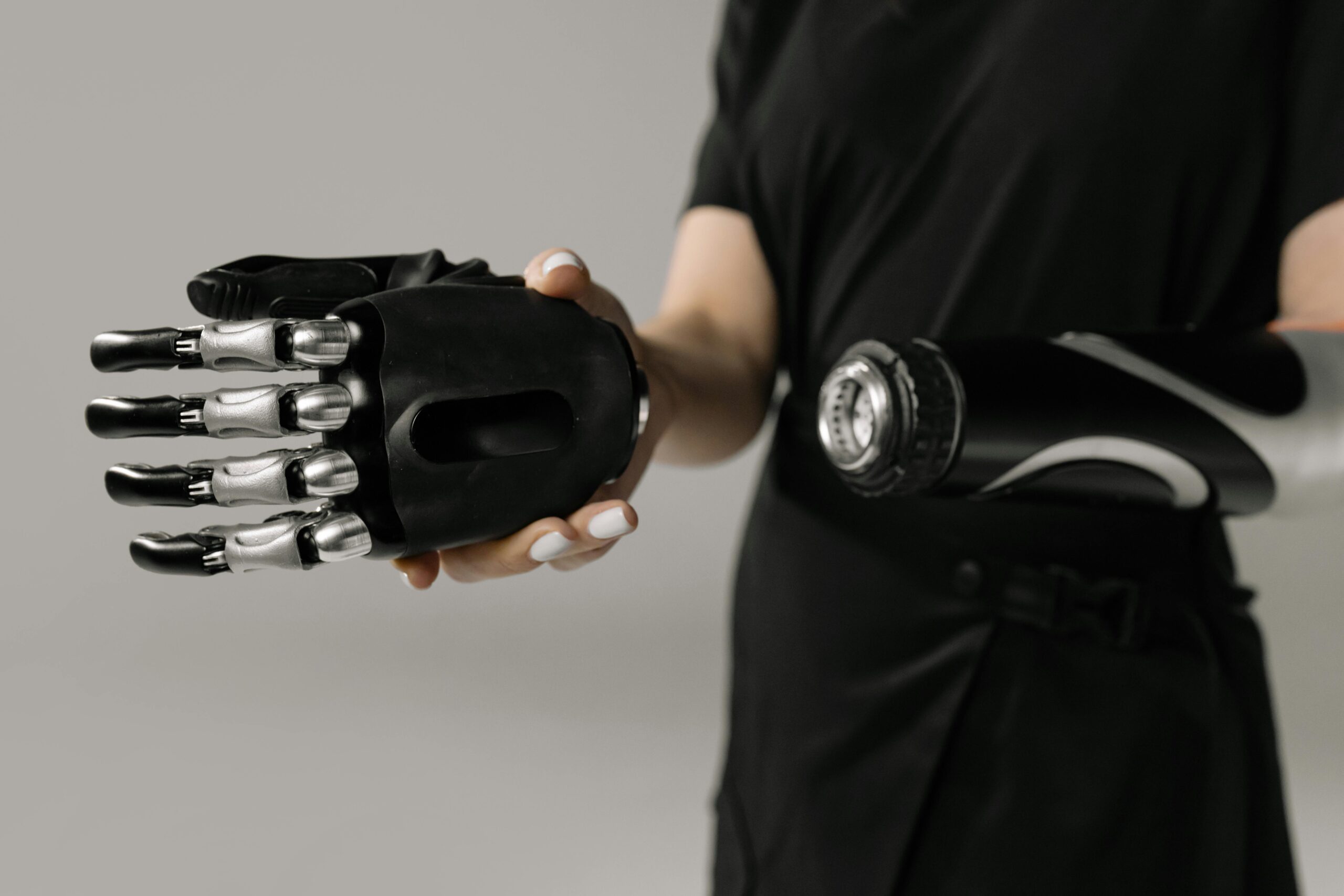
Powered exoskeletons and prosthetic limbs represent particularly demanding applications requiring accurate torque modeling in highly variable conditions. These devices must predict biological joint loads, adapt to different users and tasks, and operate efficiently to maximize battery life.
Intent recognition algorithms combine torque models with biological signals to determine user intentions. Predictive torque assistance provides support exactly when needed, creating natural-feeling movement that reduces user effort without interfering with voluntary control.
Industrial Automation and Manufacturing
Modern manufacturing demands increasingly precise positioning while maximizing throughput. Accurate torque modeling enables aggressive motion profiles that approach system limits without sacrificing quality or reliability.
Predictive maintenance programs leverage torque models to detect developing problems before failures occur. Gradual increases in required torque indicate bearing wear, misalignment, or contamination requiring attention. Early intervention prevents costly downtime and secondary damage.
Energy Optimization Through Load Modeling
Industrial facilities seeking energy efficiency improvements benefit from detailed understanding of mechanical loads. Accurate models identify opportunities for regenerative braking, motion profile optimization, and right-sizing of actuators and drive systems.
Trajectory optimization algorithms use torque models to find motion paths minimizing energy consumption while meeting cycle time requirements. For high-volume production, even small percentage improvements translate to significant cost savings and reduced environmental impact.
Validation and Testing Methodologies
Developing confidence in torque models requires comprehensive validation against experimental data. Test protocols should span the expected operating envelope, including various payloads, speeds, and environmental conditions.
Hardware-in-the-loop testing integrates physical actuators with simulated plant models, enabling systematic evaluation under controlled conditions. This approach identifies model deficiencies and validates control algorithms before deployment on complete systems.
Benchmark Standards and Performance Metrics
Quantifying model accuracy requires appropriate performance metrics. Root-mean-square errors, maximum deviations, and correlation coefficients provide different perspectives on prediction quality. Application requirements dictate acceptable performance levels.
Standardized benchmark problems enable objective comparison of modeling approaches. The robotics community has developed reference platforms and datasets facilitating reproducible research and meaningful performance comparisons across different methodologies.
Future Directions in Load Modeling
Machine learning approaches complement physics-based models, learning complex relationships from data without explicit mathematical formulation. Hybrid methods combine mechanistic models capturing known physics with neural networks representing uncertain or complex phenomena.
Digital twin concepts create virtual replicas of physical systems, continuously updated with operational data. These sophisticated models enable what-if analysis, optimal scheduling, and predictive capabilities previously unattainable with static design-phase models.
Quantum computing may eventually tackle currently intractable problems in multi-body dynamics and real-time optimization. While practical quantum advantages remain future prospects, continued classical computing advances already enable increasingly sophisticated real-time modeling capabilities.
Achieving Mastery in Motion Control
Excellence in joint load and torque modeling requires blending theoretical knowledge, practical engineering experience, and computational proficiency. Engineers must understand underlying physical principles while recognizing real-world complexities that challenge idealized models.
Continuous learning remains essential as new sensors, actuators, and computational methods expand what’s possible. Engaging with research literature, participating in professional communities, and hands-on experimentation with different approaches builds the expertise needed for cutting-edge applications.
The payoff for mastering these advanced techniques extends beyond technical performance improvements. Efficient, reliable, and precise motion systems enable new applications that were previously impossible, driving innovation across industries from healthcare to manufacturing to space exploration. Success requires dedication to understanding both fundamental principles and advanced implementation details that transform theoretical knowledge into practical performance. 🚀